


About Us
The Beginning of MCI
Historical Background
During the 16th century, at the time of the Reformation initiated by Martin Luther, the Anabaptist Movement began in 1525 AD in the city of Zurich, Switzerland, as a small group. These believers would gather in homes to read the Word of God, pray, and fellowship.
The "Swiss Brethren", who later came to be known as "Mennonites", gave this group its identity. They followed the New Testament teachings and maintained a distinction between government and church. They declared that a believer lives under two kingdoms:
-
One is the Kingdom of God, whose citizens we become through faith.
-
The other is the kingdom of the world, which is governed by rulers and authorities.
The Anabaptist people experienced continuous conflict between these two kingdoms. As soon as the government learned about the beliefs of Swiss Brethren, they declared them traitors to the state.. As a result, they had to flee from one place to another, facing persecution and hardship, which became a regular part of their lives.
Hospitality and simplicity became the norm in their daily lives. These people would often live in hiding, and the mark of martyrdom became a part of their identity.

Growth and expansion of MCI
Establishment of Churches, Current Number
From 1896 to 1899, India faced a severe and major famine. During these years, many foreign organizations started working for relief in India and people started getting relief. This area of Chhattisgarh was very much affected by famine. In this way, before the Mennonite Mission work area started, 'Mennonite Relief' work was done in many areas of India. It was not easy for Mennonite mission work to be initiated by Mennonite congregations. Even at that time, Mennonite leaders thought of a 'missionary vision'. Among them were two organizations that were theoretically and mostly engaged in relief work.
One of the organizations in Iran was called the Home and Foreign Relief Committee and the other was called the Mennonite Evangelizing and Benevolent Board. In 1906, these two organizations merged to become the Mennonite Board of Missions and Charities.
The Mennonite Evangelizing and Benevolent Board was praying for the possibility of starting mission work in India. Mennonite congregations in the US were also praying for mission work in India.
On November 1, 1898, in a meeting of the Mennonite Evangelizing Board, Dr. W. B. Page, a young physician, was appointed as the first worker for the Indian mission. Pastor J. A. Ressler was chosen for this ministry on November 3, 1898, and fifteen bishops laid their hands on Pastor Ressler’s head and said: "This is the man."
And on January 5, 1899, Pastor J. A. Ressler was also given episcopal ordination for the Indian Church.
Both appointed missionary brothers and Mrs. Page departed for India on 15th and 22nd February 1899. They reached Bombay on 24th March 1899. Pastors J.A. Russell and Dr. Page explored the mission field from Itarsi, visiting three to four other regions. On their third journey, both missionaries went through Rajnandgaon and reached Khamtari. In Rajnandgaon, the missionaries advised them to start mission work in Dhamtari. Thus, for the first time, the names of Pastors Russell and Dr. Page came before Dhamtari.
Along with the missionaries from Rajnandgaon, Pastors J.A. Russell and Dr. Page traveled 185 miles from Raipur through the wild forests to reach Jagdalpur. After a few days, they returned to Jagdalpur on 11th July. There, they found no school for boys or girls, and there was a great need for medical assistance. They returned to Raipur. From there, Dr. Page became very ill and had to stay in bed and rest completely.
While returning, one missionary in Rajnandgaon also fell seriously ill and had to return earlier. Carrying the tent, they departed in advance. From Kanker to Raipur, a distance of about 80 miles, Pastor J.A. Russell completed the journey in four days. During those four days, he walked and rested for only twelve hours. Despite the difficulties of the journey, this was a significant event as it led to the establishment of the American Mennonite Mission.
Pastor J.A. Russell wrote in his diary:
"Today, on 24th July 1899, I have decided that the work of the American Mennonite Mission will be established in Dhamtari itself."
Pastor J.A. Russell, along with sixteen tribal youths from Raipur Boarding, arrived in Dhamtari at 1 PM on the morning of 22nd November 1899, with Pastor Banger. That same morning, the Tehsildar handed over 200 thatched huts and open land to Pastor J.A. Russell. Thus, on 22nd November 1899, the American Mennonite Mission's main headquarters was established in Dhamtari, Madhya Pradesh. Pastor J.A. Russell wrote in his diary:
— “Just as the stories of the beginning of great empires are often modest, so is the story of the founding of the American Mennonite Mission.”
On the morning of 22nd November 1899, a large crowd of beggars, hungry for food and work, gathered under the open sky. In these huts, arrangements were made to provide food, clothing, and shelter. To support this, Pastor J.A. Russell received assistance from the local commissioner and other British officers. This marked the beginning of a great humanitarian effort in Dhamtari.
Deputy Commissioner Captain McNabb requested the missionaries to engage at least a hundred tribal people in some kind of work for a limited time. Thus, relief work was initiated. This relief work continued for eight and a half months. During this period, the missionaries had to pay a total of ₹9,000 as wages. Pastor J.A. Russell was appointed by the government as the honorary famine relief officer (a voluntary relief officer without pay). The missionaries' selfless service with compassion and dedication was so commendable that they did not accept any payment or honor from the government.
Under the relief work, several government tasks were carried out such as digging ponds and wells, and building roads. During this period, a pond each was dug in Hatkachhara, Sondhur, and Nava Gaon. A four-mile-long forest road was constructed between Dhamtari and Rusli using stone and gravel. In December 1899, about one hundred and fifty people were employed for the mission’s construction work in Sunderganj Compound. Serving cooked food daily to the victims was also a part of this relief work.
We thank the Lord that for fifty years (1900–1950), the American Mennonite Mission and its missionaries rendered great service in this area.
With selflessness and sacrifice, they continued to serve and help the people while preaching the gospel of the Lord. They established congregations (churches). They worked together with Indian brothers and sisters. They always paid attention to the growth of the church and its spiritual development.
The Board of Missions announced the end of its service in this region on 1st July 1952. Before that, the Board of Missions had already started gradually calling its missionaries back from this region. Some missionaries were sent from other Mennonite mission centers (like Bihar) to serve temporarily. By 1975, the mission had been completely handed over.
Now, the Mennonite church in this region is fully independent, as it has been established on the foundation of Jesus Christ the Lord. Now, the local church is responsible for leading and growing, and the church fellowship is progressing well.
Now, the Mennonite church in this region is fully independent, as it has been established on the foundation of Jesus Christ the Lord. Now, the local church is responsible for leading and growing, and the church fellowship is progressing well.

missionaries in dhamtari india-1932

evangelists and mission school teachers india-1926

Establishment of Mennonite Churches/Congregation
The missionaries began their service with large-scale relief work in the first phase. Despite limited resources and challenging circumstances 80 years ago, these servants of the Lord showed great love and compassion for the suffering people. In the second phase of service, free food kitchens, homes for the poor, orphanages, leprosy homes, hospitals, and ultimately churches were established. In the third phase, the work of service through free kitchens and other relief activities began to be done on a large scale.
church fellowship is progressing well.
Among these free food kitchens, the one in Sunderganj was the largest. It was operated by Dr. Page. Apart from the Sunderganj kitchen, Pastor Russell operated 41 food kitchens in 38 villages. In Sunderganj alone, 1,400 people were provided food twice a day. Pastor Russell recorded the number of people who received food from the kitchens to be 14,000.
When the children raised in the orphanages grew up, they were baptized, and young boys and girls from the orphanages were married and formed Christian families. On 23rd December 1900, more than 200 orphans were under the care of the mission. Pastor J.A. Russell baptized 43 young orphans. This marked the beginning of the Sunderganj church in Dhamtari. Later, a church building was constructed. Today, the Mennonite Church is operating the following congregations in this region:
1. 1900 – Sunderganj Mennonite Church, Dhamtari (District – Dhamtari)
2. 1901 – Mennonite Church Maradev, Dhamtari (District – Dhamtari)
3. 1906- Bethel Mennonite Church Balogahan (District – Balod)
4.1911 – Zion Mennonite Church, Sankara (District – Balod)
5.1916- Mennonite Church, Ghathula (District – Dhamtari)
6.1921 – Mennonite Church, Mohandi (District – Dhamtari)
7.1922 – Mennonite Church, Shantipur (District – Dhamtari)
8. 1932 – Hope Station Mennonite Church, Daundi (District – Balod)
9.1936 – Mennonite Church, Mangaltarai (District – Balod)
10.1936 – Mennonite Church, Durg (District – Durg)
11.1953 – Mennonite Church, Kanker (District – Kanker)
12.1954 – Mennonite Church, Rajnandgaon (District – Rajnandgaon)
13.1964 – Mennonite Church, Kusumkasa (District – Balod)
14.1968 – Mennonite Church, Dallirajhara (District – Balod)
15.1977 – Hebrom Mennonite Church, Balod (District – Balod)
16. 1981 – Mennonite Church, Bhilai (District – Durg)
17. 1991 – Ebenezer Mennonite Church, Charama (District – Balod)
18.1991 – Mennonite Church, Bhanupratappur (District – Kanker)
19. 1991 – Mennonite Church, Narayanpur (District – Narayanpur)
20.2006 – Mennonite Church, Keshkal (District – Kondagaon)
21.2011-Mennonite Church, Kurud (District – Dhamtari)
22. 2013 Mennonite Church, Singhpur (District – Dhamtari)
23. 2024 – Mennonite Church, Abhanpur(District – Raipur)
24. 2025 – Mennonite Church, Raipur(District – Raipur)
25. 2025 – Mennonite Church, Mohalla (District – Mohalla–Manpur–Chowki)
26. 2025 – Mennonite Church, Banjari(District – Dhamtari)
At Present, the Mennonite Church in india is operating outstations in the following locations, which are likely to be established as congregation (church) in the near future:
-
Singarbhat (District – Kanker)
-
Dhanora (District – Kondagaon)
-
Gundardehi (District – Balod)
-
Malighori (District – Balod)
-
Bhakhara (District – Dhamtari)
-
Shantinagar, Narayanpur (District – Narayanpur)
Self-Reliance
Due to the strong encouragement from the Prem (Love), the Mennonite Church in India is managing all its congregations with the financial support of its members. All congregations manage their worship buildings themselves. All activities conducted throughout the year — including outreach work, relief work, building construction, and donations — are fully managed by them. The Mennonite Church in India is self-reliant in this regard and also willingly helps other institutions whenever necessary. Land has been purchased for the construction of worship buildings in Amnupur and Banjari.
Achievements
1. Reaching Remote Areas and Establishing Churches
From the beginning, missionaries under the Mennonite Mission have worked in remote areas. Indian workers also made efforts to expand the mission in different directions. Ghotula, Mangalnar, Jodhi, Mohandi, and other places are examples of churches and congregations established in remote areas.
Currently, outstations are being operated in Dhanora, Banjari, and Mohala, which are also remote areas.
2. Preparing Christians for Good Education and Service
From the very beginning, missionaries dedicated themselves wholeheartedly to excellent service through orphanages, care homes, schools, and hospitals. As a result, educated and committed Christians emerged from this ministry. The descendants of these early believers (now the third generation) are still faithfully serving today in churches, schools, and hospitals.
In this area, the Mennonite Christian community is working through schools and hospitals to educate the underprivileged and provide quality healthcare services. The church, through its outreach stations, is also spreading the Gospel among this group and helping them become part of the mainstream society.
The Central Mennonite Christian Women’s Fellowship and the Central Mennonite Youth Fellowship have consistently provided opportunities for women and youth to take on leadership roles. Women and young people are stepping forward in church ministry. Our women and youth are actively leading in the All India Mennonite Women’s Fellowship and the All India Mennonite Youth Fellowship. Currently, five seminary-trained young pastors are serving in churches, and one young person is undergoing seminary training.
The Mennonite Church in India has been affiliated with national and international organizations from the beginning. These include organizations such as Church’s Auxiliary for Social Action (CASA) and the National Council of Churches in India, the Evangelical Fellowship of India, the Mennonite Christian Service Fellowship of India, and the Mennonite World Conference."
At present, the Mennonite Church in India is actively moving forward in evangelistic outreach in new areas, in collaboration with United Christian Prayer for India and the Replication Movement. New outreach stations are being established, and evangelists are being appointed in these regions.
our ex-bishops

First Bishop of MCI
bishop p.j malagar
His full name was Pyarelal Joel Malagar,
Pyarelal was ordained as Bishop on 8/5/1955

Second Bishop of MCI
BISHOP O.P LAL
His full name was Obdiah Paul lal,
O.P Lal was ordained as Bishop on 1965

Third Bishop of MCI
bishop c.k jabior
His full name was Chandra Kumar Jebiar,
C.K Jebiar was ordained as Bishop on 4/2/1990

Fourth Bishop of MCI
bishop S.S KUNJAM
His full name is Shant Kumar Kunjam,
S.S Kunjam was ordained as Bishop on 4/11/1994
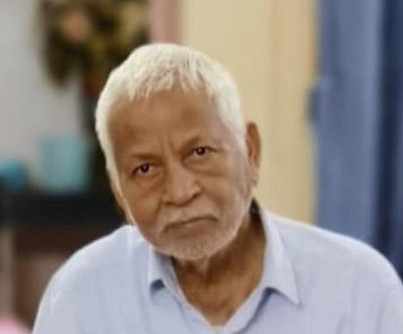
Fifth Bishop of MCI
BISHOP C.F NATH
His full name is Christopher Fulten Nath,
C.F Nath was ordained as Bishop on 20/10/1999